How Social Media Makes Us All Act the Same
Disclaimer: This post may contain affiliate links of products I’ve used or approve; If you buy from them, you won’t pay a penny more but I receive a small compensation that helps me create more content like this! Thank you 🙂 As an Amazon Associate I earn from qualifying purchases.
Here’s how social media makes us all the same: not with a dramatic villain in a hollowed-out volcano, but with a thousand tiny nudges a day, each one politely suggesting that you might enjoy being exactly like everybody else.
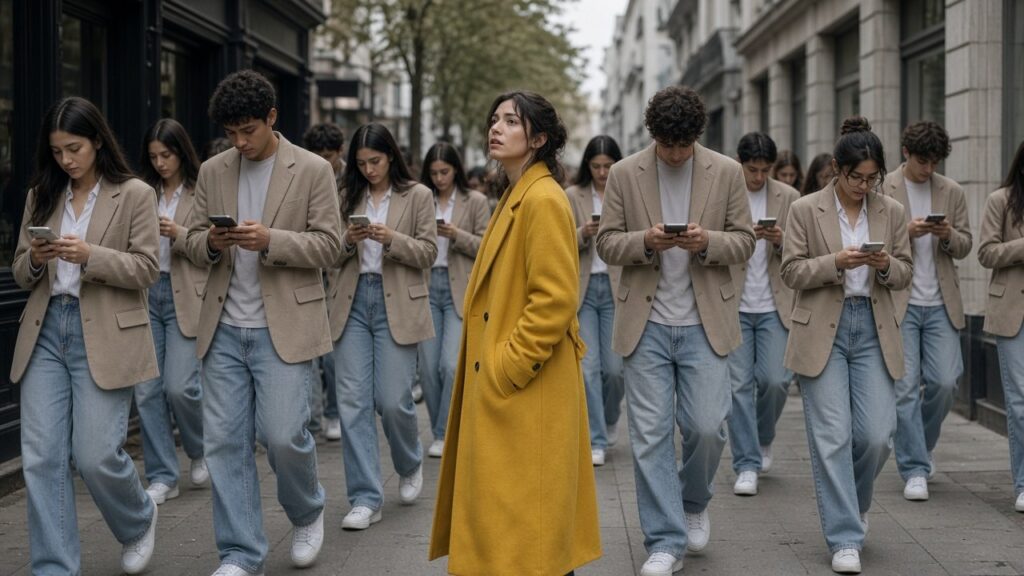
Look around any café. Same jeans. Same sneakers. Same oversized blazer that fits nobody and is worn by everyone. Listen in and you’ll hear the same five phrases, the ones that were funny on a stranger’s video in March and are now load-bearing parts of the language. Open your phone and everyone is furious about the same thing, in the same words, at the same hour, like a choir that only knows one song and it’s a scream.
Be yourself, the old advice goes; everyone else is already taken. Updated version: be yourself, everyone else is already trending.
This isn’t a rant about “kids these days” or a call to throw your phone into the sea. I like the internet. It’s where curious people find each other. But it’s worth asking why a tool that connects billions of very different people keeps producing one very similar person. So let’s look at the three places it shows most: what we wear, how we talk and what makes us angry.
Why Social Media Makes Us All the Same
Humans have always copied each other. It’s how we learned which berries kill you and which ones go nicely with cheese. Copying the group was, for most of history, an excellent survival strategy. The person who wandered off to “do their own thing” was frequently eaten.
What social media changed is the scale and the speed. Your grandmother copied her village. You get to copy the whole planet, ranked for you by a recommendation system that has one main goal: keep you watching. And the easiest way to keep millions of people watching is to show them what millions of other people are already watching.
That loop is the engine of how social media makes us all the same. The feed becomes a giant mirror that only reflects the middle of the crowd. Things that are already popular get shown more, which makes them more popular, which gets them shown more. It’s a hall of mirrors, and we’re all in it, practicing the same pose.
That sameness also feels good, which is the sneaky part. Matching the group feels like belonging. Wearing the thing, saying the thing and being angry at the thing is a way of saying “I’m one of you” without having to say anything at all.
Why Do We All Dress the Same Now?
Fashion used to move in seasons. Now it moves in “cores.” Cottagecore. Clean girl. Mob wife. Each aesthetic arrives with a name, a uniform and a shopping list, peaks in a few weeks, and then quietly dies in the back of a million closets, still wearing its tags.
The trick is that you’re not really choosing what you like anymore. You’re choosing from what you were shown, and everyone was shown roughly the same thing. Taste gets outsourced to an algorithm that has never been cold, never been to a wedding and has no idea what suits your shoulders.
The quiet rebellion is boring on purpose: buy fewer things, and buy things that were already good before the trend and will still be good after it. A pair of Levi’s 501 Original jeans, a cut that has been around for well over a century, doesn’t care what this month’s aesthetic is called. Neither does a well-made boot like the Thursday Boot Co. Duchess Chelsea. If boots are your thing, I wrote about western boots for women that have outlived plenty of trends too.
Wear what you like. Just make sure it’s actually you who likes it.
Slang on a Treadmill: How Social Media Changes the Way We Talk
Language has always borrowed, stolen and reinvented. That’s healthy. A language that never changes is called Latin, and it doesn’t get invited to parties.
What’s new is the treadmill. A phrase can start in a small corner of the internet, go everywhere in a few months and be cringe by the following spring. “Rizz” went from internet slang to Oxford’s Word of the Year in 2023. The year after, Oxford picked “brain rot,” which feels like the internet briefly becoming self-aware.
Then there’s algospeak: words people invent to slip past content moderation, like saying “unalive” instead of a word the platform might punish. That one is fascinating, because it means the rules of a platform are now quietly editing how millions of people talk about serious things, even offline.
None of this makes slang bad, and nobody needs a lecture for saying something “ate.” The point is smaller and more interesting: notice when a phrase comes out of your mouth that you didn’t choose. Ask whether it says what you mean, or just proves you were online that week. Your own words, the odd, specific ones, are part of what makes you good company.
Collective Rage: Social Media Herd Mentality and Outrage
And then there’s the anger. Every day has a Main Character, a person or a thing the whole internet has agreed to be furious at. By lunch the takes are identical. By dinner, being slightly less furious looks suspicious.
This isn’t only a feeling. Researchers at Yale studied this on Twitter and found that when people’s outraged posts got more likes and shares, they posted more outrage afterward. In plain words: the platform rewards outrage, and we learn the lesson like well-trained pigeons (Brady et al., Science Advances, 2021).
A follow-up study found something even more useful: people tend to overestimate how outraged others actually are online, and that inflated picture makes the other side seem more hostile than it is (Brady et al., Nature Human Behaviour, 2023). The crowd looks angrier, and more united in its anger, than the people in it really are.
That’s worth sitting with. Part of the rage you see is a performance with an audience and a scoreboard. Joining in feels like having an opinion, but often it’s just agreeing loudly with whoever got there first.
It’s also why disagreement gets so expensive online, and why comedy, which lives on saying the unexpected thing, gets hit hardest. I’ve written about that in why we need to make comedy offensive again and in making sense of PC culture.
Social Media Conformity Sticks. Curiosity Is the Way Out
Here’s the uncomfortable bit about how social media makes us all the same: the sameness isn’t just something done to us. It’s comfortable. Closed-mindedness is the default setting because it’s cheap: you don’t have to think, you just have to match. Curiosity costs more. You have to sit with an idea you don’t like yet, ask a question that makes you look less certain and occasionally discover that you were wrong in public.
But curiosity is also the only thing the algorithm can’t mass-produce. It can show you the same outfit, the same phrase and the same villain. It can’t make you wonder why. That part is still yours.
And the antidote to one giant feed isn’t no information. It’s more varied information: people who disagree with you, sources that weren’t picked for you, and conversations long enough to have a middle. If you want a place to start, I put together some alternatives to mainstream media.
How to Keep Your Own Taste, Words and Temper
No dramatic exits required. Small, kind nudges work better:
- Wait before you buy the trend. If you still want it in a month, it might actually be your taste. If you forgot it existed, the algorithm wanted it, not you.
- Pause before you parrot. Before you repeat the phrase or join the pile-on, ask: do I mean this, or did I just see it a lot today?
- Talk to someone who isn’t in your feed. Ideally in person, ideally someone who disagrees with you about something, ideally over food.
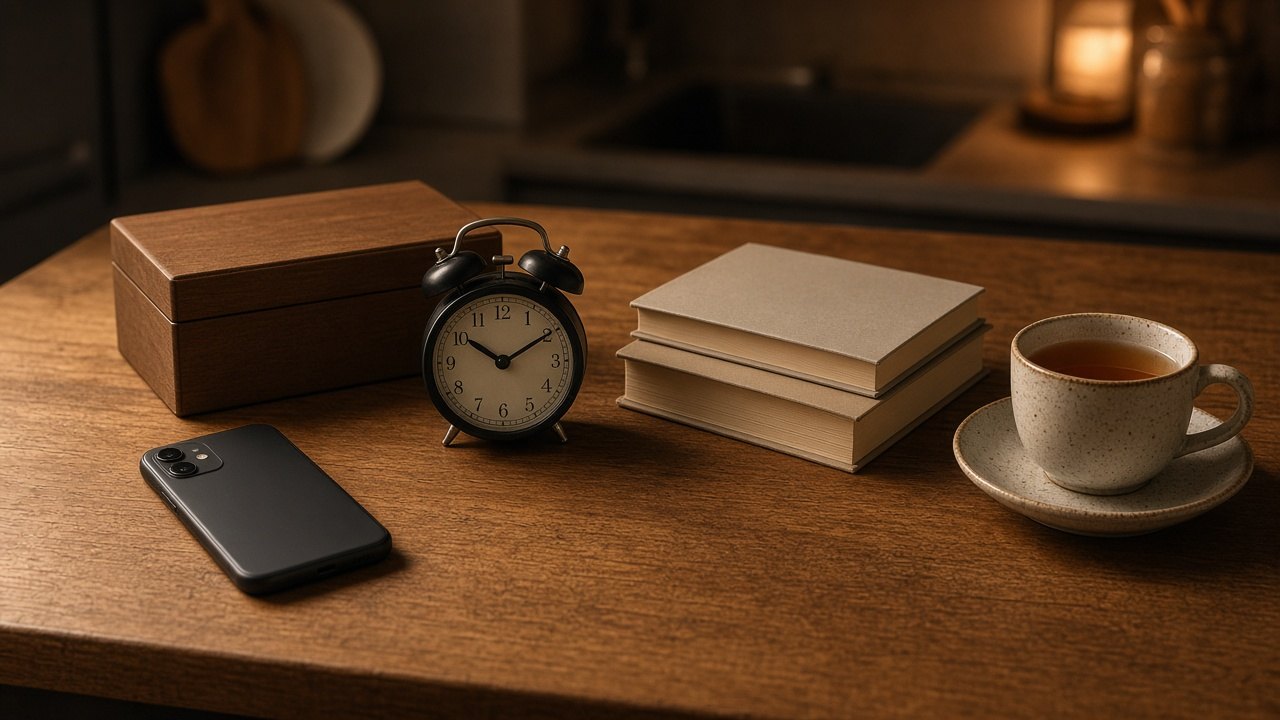
- Get the phone out of the bedroom. The midnight scroll is where most of us absorb the day’s outrage on autopilot. A cheap analog alarm clock removes the main excuse for keeping the phone by the bed.
- Read something longer than a caption. Long-form reading is a gym for attention, and attention is what the feed is quietly harvesting.
A little practicing helps too. If you like the idea of training your mind to react less and think more, my piece on how to be more positive using Stoicism fits right here.
A Small Off-Feed Kit
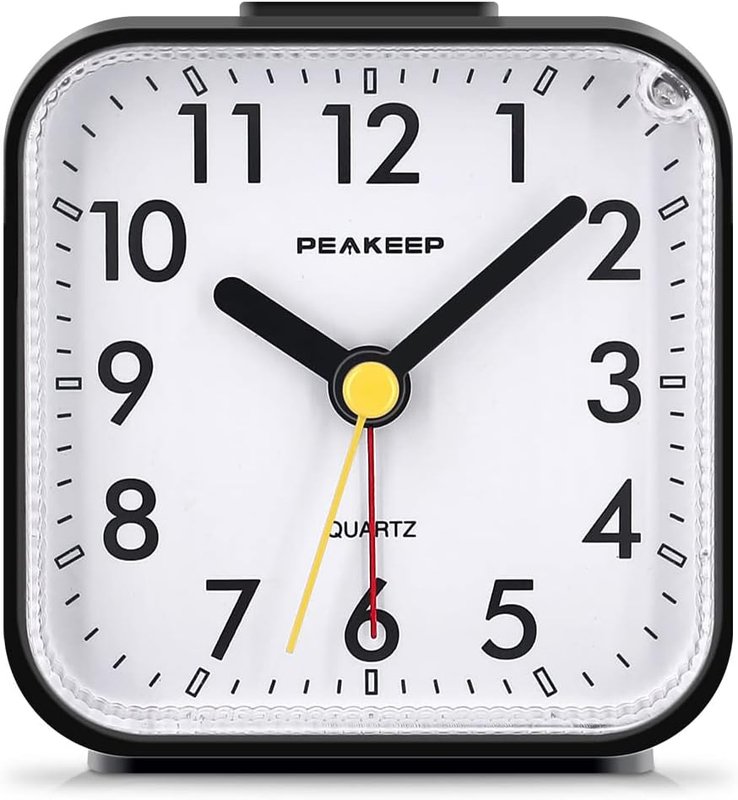
Peakeep Silent Analog Alarm Clock
Non-ticking, battery-powered, lighted dial. Wakes you up without showing you the news.
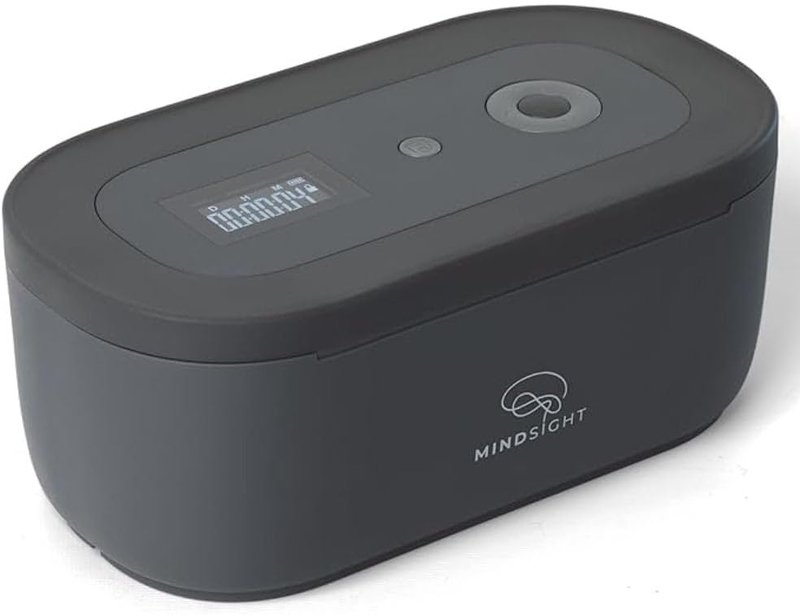
Mindsight Timed Lock Box
Lock the phone away for a set time. Holds a few phones, so the whole household can join the experiment.
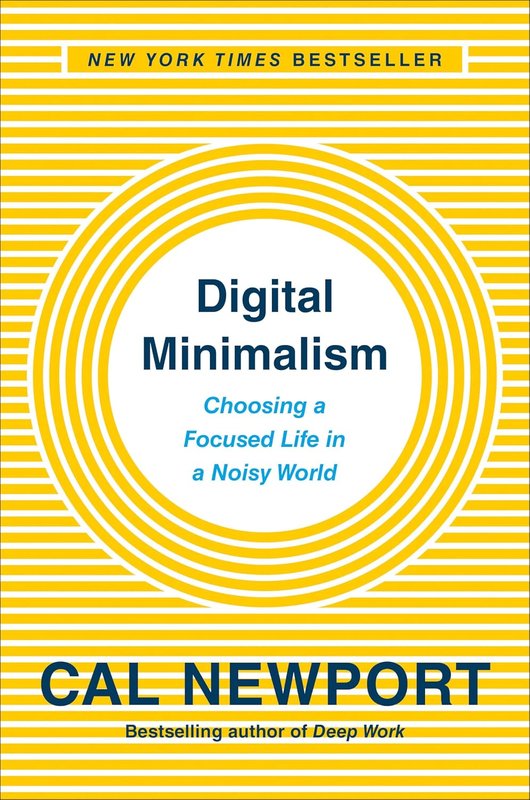
Digital Minimalism by Cal Newport
A clear, practical book about using technology on purpose instead of by reflex.
How Social Media Makes Us All the Same: FAQ
Why do we all dress the same now?
Because most of us are shown the same trends by the same recommendation systems at the same time. Microtrends spread fast, peak fast and make taste feel like a shared shopping list. Buying fewer, longer-lasting pieces is the easiest way out.
Does social media cause herd mentality?
It doesn’t invent it, since humans have always copied the group, but it amplifies it. Popular content gets shown more, and research suggests that likes and shares reward outrage, so people learn to post more of it.
How does social media change the way we talk?
It speeds slang up and spreads it wider. Phrases jump from niche corners of the internet into everyday speech within months, and “algospeak” words invented to dodge moderation, like “unalive,” end up being used offline too.
Why is everyone so angry online?
Outrage gets engagement, and engagement gets rewarded. Studies also show people overestimate how angry others are online, so the crowd can look more furious and more united than it really is.
Can you actually opt out of trends?
Mostly, yes, with small habits rather than a dramatic exit: wait before buying, pause before repeating a phrase or joining a pile-on, read long-form, talk to people outside your feed and keep your phone out of the bedroom.
Be the Yellow Coat
Nobody is asking you to become a hermit who communicates only by handwritten letter and disapproving looks. The feed isn’t evil. It’s just very, very good at making the middle of the crowd feel like the whole world.
Knowing how social media makes us all the same is half the cure. The other half is small and stubborn: notice what you didn’t choose, keep what you actually like, and stay curious about the people who aren’t like you. It’s harder than matching. It’s also a lot more fun, and much better company.
In a world that keeps suggesting you’d look great in the same thing as everyone else, being a little different isn’t rebellion. It’s just honesty with good posture.
More essays on how we live, think and argue are in Society.
Share:

Sara Moura
With a deep taste for the uncensored, lover of science, poetry, and all things gastronomy. I'm a curious human with a penchant for laughter.